
What Is Experiential Learning?
Experiential learning centres lessons around direct experience rather than passive content delivery. Students learn by doing, then reflect on what that experience taught them, building understanding through action rather than only through explanation. This learning by doing approach often produces deeper, more durable understanding than instruction alone, particularly for practical and conceptual skills.
Australian teachers increasingly use experiential learning because it engages students who struggle with purely abstract or text-based instruction. A well-designed experiential learning lesson plan structures the experience, the reflection, and the connection back to curriculum content, so the hands-on activity produces genuine learning rather than just a memorable but disconnected event.
Experiential Learning Examples Across Subjects
Experiential learning examples take many forms depending on subject and resources.
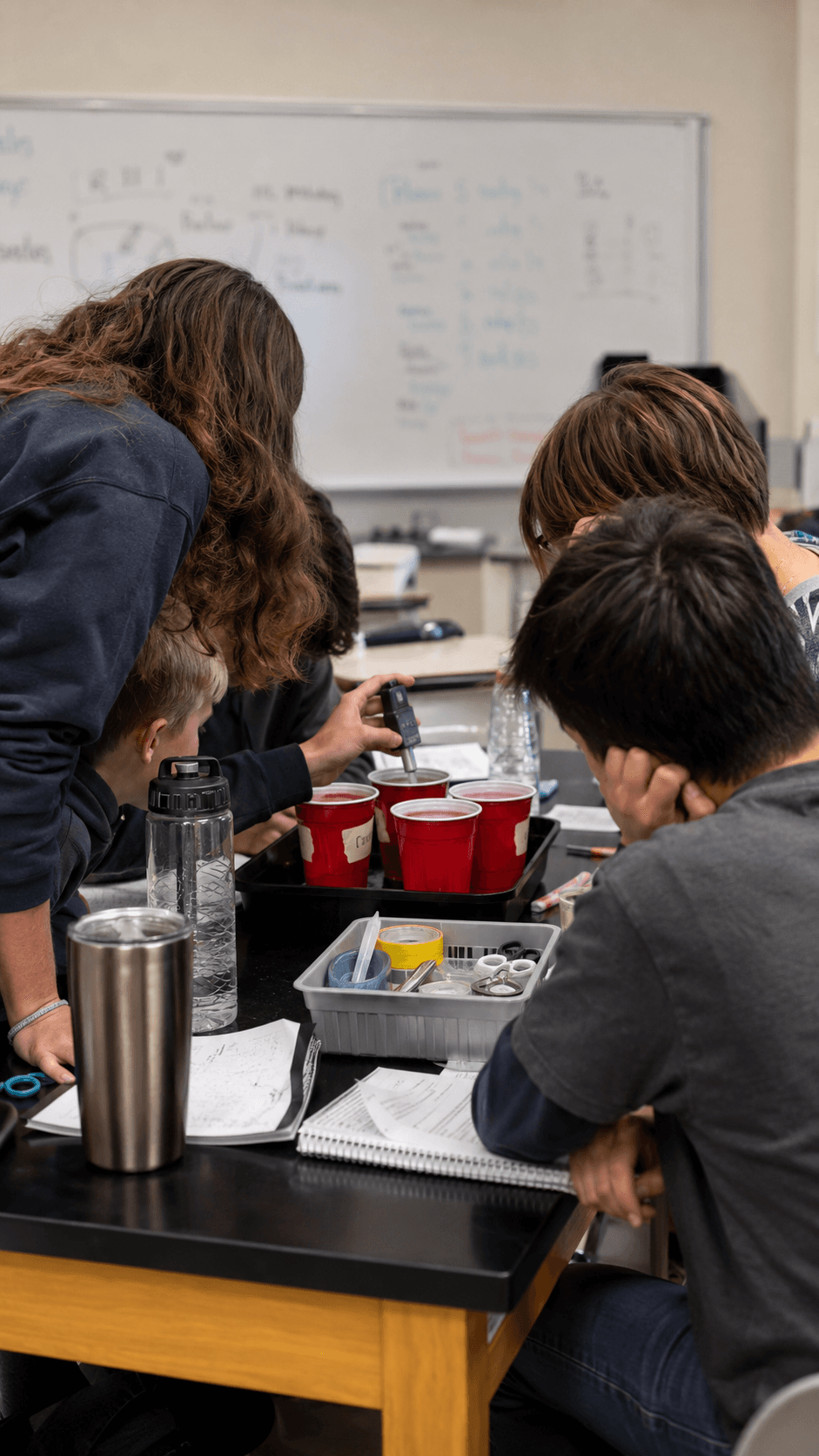
In science, students might conduct a hands-on investigation rather than reading about an experiment's results. In geography, a fieldwork activity lets students collect and analyse real data from their local environment. In design subjects, students often build and test a physical prototype rather than only sketching a design.
Hands on learning activities don't always require elaborate resources.
Role-plays, simulations, and structured experiments using everyday classroom materials can all deliver genuine experiential learning. What matters most is that students actively engage with the experience, then reflect on what it revealed, rather than treating the activity as an isolated event disconnected from the lesson's learning goal.
The Role of Reflection in Experiential Learning
Reflection separates true experiential learning from simply doing an activity for its own sake.
Without a structured reflection step, students can complete a hands-on task without connecting it to the broader concept being taught. Strong experiential learning lesson plans build in time for students to discuss, write, or present what they learned from the experience.
This reflection step also supports assessment,
giving teachers insight into whether students genuinely understood the underlying concept or simply completed the physical task without grasping its purpose.
Building Experiential Lessons With Make My Lesson
Plan Without the Overhead
Select Details and Generate
Customise for Your Classroom
Why Teachers Trust Make My Lesson for Experiential Learning
Make My Lesson was developed with input from Australian teachers who understand how to design hands-on activities that genuinely build understanding rather than just filling lesson time. The platform's experiential learning structures reflect proven classroom practice, not generic activity ideas borrowed from unrelated contexts.
Teachers across Australian primary and secondary schools already use Make My Lesson to plan experiential lessons across multiple subjects. The platform runs on secure, education-focused AI technology built specifically for the schooling sector, with curriculum mapping reviewed regularly against current Australian Curriculum standards. This keeps every experiential learning lesson plan accurate and genuinely classroom-ready.
Common questions
Before you get started...
Clear answers to the practical questions teachers usually ask about this approach.
What is experiential learning in education?
Experiential learning has students build understanding through direct, hands-on experience, followed by structured reflection that connects the activity to the broader learning concept.
How is experiential learning different from hands on learning activities generally?
Experiential learning specifically includes a structured reflection step, which separates it from hands-on activities that may lack that deeper connection back to the learning goal.
Does Make My Lesson support experiential learning lesson plans?
Yes. Make My Lesson generates curriculum-aligned experiential learning lesson plans, including hands-on activities, required materials, and a structured reflection component.
Why is reflection important in experiential learning?
Reflection helps students connect a hands-on experience to the underlying concept being taught, ensuring the activity produces genuine learning rather than just a memorable event.
Can experiential learning lesson plans work without specialised equipment?
Yes. Many experiential learning examples, such as role-plays, simulations, and simple experiments, use everyday classroom materials rather than specialised resources.
Start Building Experiential Lessons Today
Experiential learning lesson plans don't need hours of extra preparation. Try Make My Lesson and generate your first hands-on activity, complete with materials and a structured reflection step, in minutes. Sign up free and see how learning by doing can deepen engagement in your classroom this term.